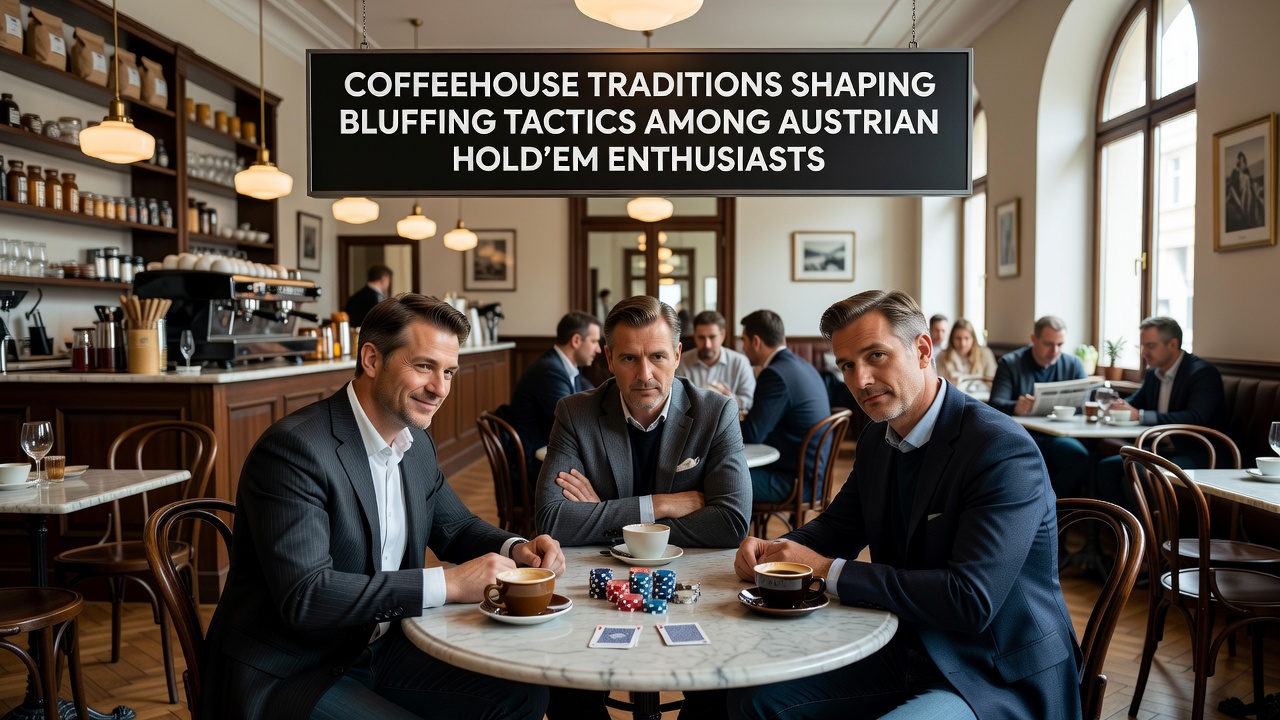
Coffeehouse Traditions Shaping Bluffing Tactics Among Austrian Hold'em Enthusiasts
Austrian coffeehouse culture dates back centuries and continues to intersect with Texas Hold'em communities across the country, where social observation skills developed in those environments translate directly into refined bluffing approaches. Patrons in traditional Viennese establishments have long practiced reading subtle cues during extended conversations, and enthusiasts carry those habits into card rooms when they participate in local tournaments and cash games.
Data from regional gaming reports shows steady growth in Hold'em participation throughout Austria, with many clubs hosting weekly sessions that draw from the same demographic groups frequenting coffeehouses. Observers note how players often replicate the measured pacing of coffeehouse debates when deciding whether to represent strength or weakness in key hands.
Historical Roots of Social Observation in Austrian Gatherings
Coffeehouses in cities like Vienna and Graz served as hubs for intellectual exchange since the 17th century, and this legacy shapes how modern enthusiasts approach deception at the felt. Researchers from European academic institutions have documented patterns where individuals honed non-verbal communication skills through hours of dialogue over newspapers and chess boards. Those same patterns appear in Hold'em settings, where prolonged eye contact or deliberate pauses mirror tactics refined in public spaces.
Figures from the Austrian Federal Ministry of Arts and Culture reveal ongoing preservation efforts for these venues, which still attract diverse crowds who later migrate to poker events. One study conducted at the University of Vienna examined group dynamics in such locations and found consistent use of indirect signaling, a behavior that surfaces when Austrian players employ timed bets to mislead opponents during multi-street bluffs.
Psychological Transfer from Coffeehouse to Card Table
Players frequently apply lessons from coffeehouse interactions when constructing narratives around their holdings. Extended observation periods in cafes train participants to detect micro-expressions and posture shifts, elements that experts identify as central to successful semi-bluffs in Hold'em formats. Research published by the University of Sydney highlights how social environments emphasizing verbal restraint encourage players to rely more heavily on betting patterns rather than spoken tells.
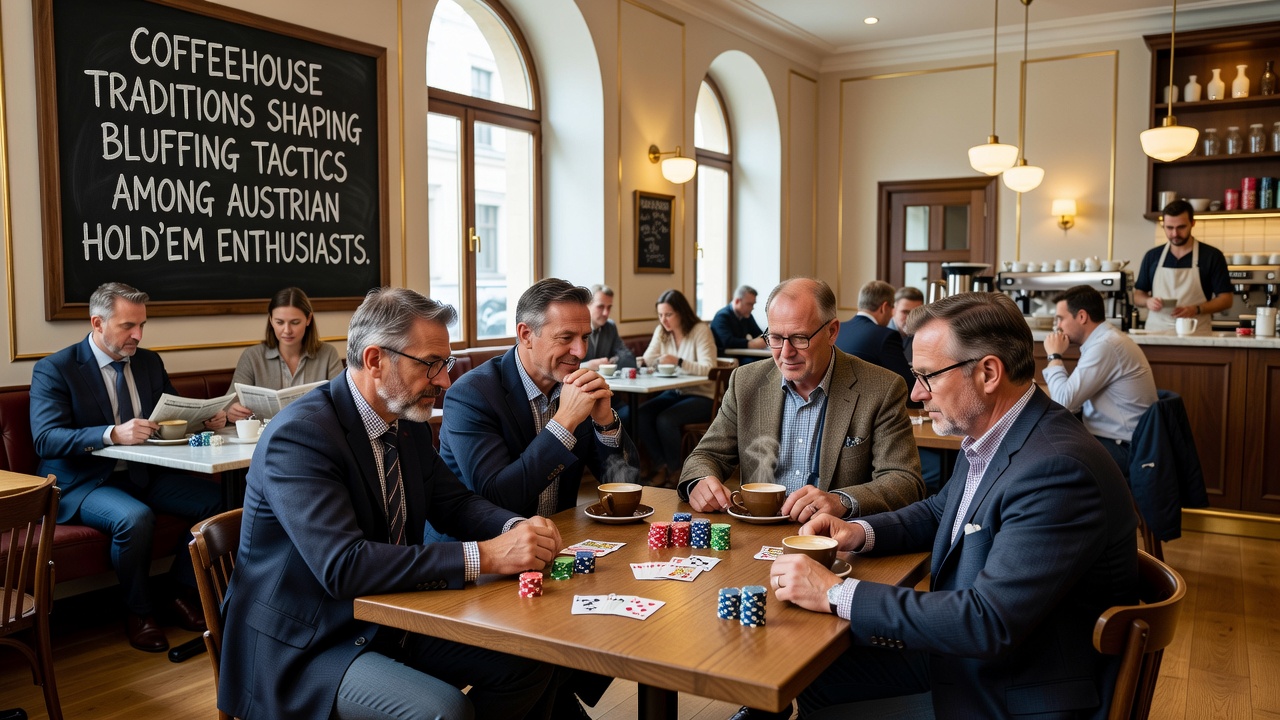
Community records indicate that clubs in Salzburg and Innsbruck incorporate elements reminiscent of traditional cafes, including quiet corners for pre-game discussions. This setup allows enthusiasts to practice reading intentions before cards are dealt, a habit that carries over when they face river decisions requiring precise bluff sizing. Data from the European Gaming and Betting Association points to similar cultural overlaps in neighboring countries, though Austrian variants emphasize collective storytelling traditions.
Contemporary Applications in August 2026 Tournaments
Upcoming events scheduled for August 2026 across multiple Austrian regions will feature formats that reward patient, observation-driven play, reflecting the steady influence of longstanding social customs. Tournament organizers report increased registration from demographics that frequent established coffeehouses, where group analysis sessions often precede live play. Those sessions focus on dissecting previous hands through layered discussion, a method that sharpens the ability to maintain consistent betting lines during bluffs.
Industry reports from the Canadian Gaming Association note parallel developments in other jurisdictions, yet Austrian participants distinguish themselves through reliance on historical social frameworks rather than solely digital training tools. Local leagues continue to track performance metrics that correlate extended pre-game socializing with higher success rates in deception-heavy strategies.
Regional Variations Across Austria
Enthusiasts in western provinces tend to integrate alpine social customs with coffeehouse practices, resulting in bluffing sequences that incorporate longer thinking intervals. Eastern clubs, by contrast, draw from urban coffeehouse rhythms that favor quicker transitions between observation and action. Government statistics compiled by the Austrian Statistical Office document these geographic differences in participation rates and average session durations.
One documented case involved a series of cash games in Linz where players adapted cafe-style indirect questioning into verbal table talk, prompting adjustments in how opponents interpreted bet sizes. Such adaptations demonstrate the ongoing evolution of tactics rooted in public gathering norms.
Conclusion
Austrian Hold'em communities maintain clear connections to coffeehouse traditions through shared emphasis on observation, pacing, and narrative construction during play. Regulatory data and academic findings confirm that these cultural elements persist as players refine their approaches in both casual and competitive settings. Events planned for August 2026 will likely showcase further examples of this integration as new participants enter the scene.